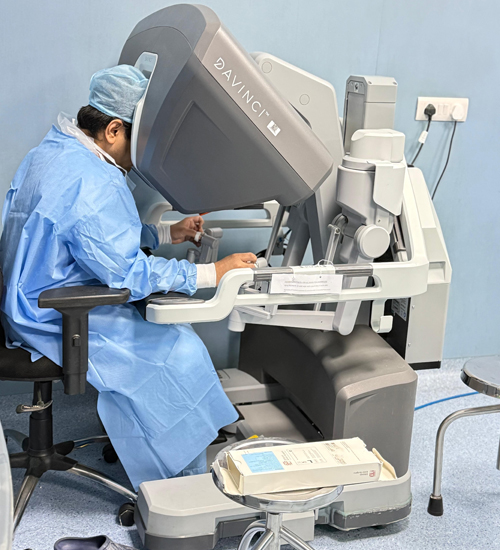
Minimally Invasive Laparoscopic and Robotic Surgery
Minimally invasive surgery uses small incisions and specialized instruments to perform complex abdominal procedures with less disruption to the surrounding tissues. Laparoscopic surgery is performed using a camera and long, specialized instruments, while robotic surgery uses a robotic surgical system that provides enhanced visualization and precise instrument control.
These techniques can be used for a wide range of gastrointestinal, hepatobiliary and abdominal procedures in appropriately selected patients. The choice of laparoscopic, robotic or open surgery depends on the type and complexity of the disease, previous surgeries, patient factors and the surgeon's assessment.
Conditions
Minimally invasive laparoscopic and robotic approaches may be considered for several abdominal and gastrointestinal conditions, including:
- Gallbladder stones and gallbladder disease
- Inguinal, umbilical and incisional hernias
- Appendicitis
- Colorectal diseases and selected colorectal cancers
- Gastrointestinal tumors
- Selected liver and pancreatic conditions
- Selected stomach and small bowel conditions
- Complex abdominal conditions requiring minimally invasive surgery
The suitability of minimally invasive surgery depends on the specific disease, its extent and location, previous abdominal operations and the patient's overall health.
Symptoms
Minimally invasive surgery is a treatment approach rather than a specific disease. The symptoms requiring surgery depend on the underlying condition and may include:
- Persistent or severe abdominal pain
- Abdominal swelling or discomfort
- Nausea and vomiting
- Changes in bowel habits
- Difficulty passing stools or gas
- Jaundice in selected hepatobiliary conditions
- Visible or painful abdominal wall or groin swelling
- Unexplained weight loss or loss of appetite
The symptoms and investigations associated with each condition help determine whether surgery is required and which surgical approach may be appropriate.
Causes
The need for minimally invasive surgery arises from different gastrointestinal, hepatobiliary and abdominal conditions. Common indications include:
- Gallstone disease
- Abdominal wall hernias
- Acute appendicitis
- Benign gastrointestinal diseases
- Selected gastrointestinal and colorectal cancers
- Selected liver and pancreatic diseases
- Conditions requiring removal or repair of abdominal organs
- Other surgically treatable abdominal conditions
The underlying disease, its severity and the patient's individual anatomy determine whether laparoscopic, robotic or open surgery is the most suitable approach.
Treatment
Minimally invasive surgery is performed through small incisions using a camera and specialized surgical instruments. Robotic surgery uses a robotic platform controlled by the surgeon to provide enhanced visualization and precise instrument movement.
Procedures may include:
- Laparoscopic cholecystectomy for gallbladder disease
- Laparoscopic or robotic hernia repair
- Laparoscopic appendectomy
- Laparoscopic or robotic colorectal surgery
- Selected laparoscopic stomach and small bowel procedures
- Selected minimally invasive liver surgery
- Selected minimally invasive pancreatic procedures
- Robotic-assisted complex abdominal procedures in appropriately selected patients
Potential benefits of minimally invasive surgery may include smaller incisions, reduced postoperative discomfort, shorter hospital stay and faster recovery in appropriately selected patients.
Not every patient or condition is suitable for a minimally invasive approach. In complex or advanced disease, conversion to open surgery may be necessary when it provides a safer or more effective treatment.
Prevention
Minimally invasive surgery is a treatment technique and therefore does not itself prevent disease. However, maintaining good health and seeking timely medical evaluation can help identify conditions before they become more advanced.
- Maintain a healthy body weight and balanced diet.
- Remain physically active and follow a healthy lifestyle.
- Seek early medical evaluation for persistent abdominal symptoms.
- Follow recommended screening for gastrointestinal cancers when appropriate.
- Follow medical advice for known gallbladder, gastrointestinal or abdominal conditions.
- Attend regular follow-up after previous abdominal surgery.
- Do not delay treatment when a surgical condition is diagnosed.
Timely diagnosis and appropriate surgical planning can help patients receive the most suitable treatment approach while supporting a safe recovery.